
If you have never come across the term returnable boxes, the idea is simple: they are heavy-duty, reusable polypropylene (PP) containers designed to be used, returned and reused multiple times. Unlike standard single-use packaging that is discarded after delivery, a returnable PP box becomes part of a continuous packaging loop.
For example, an automotive parts supplier may send components to an assembly plant in sturdy returnable PP boxes. Once unloaded, the empty plastic containers are collapsed or stacked and sent back to the supplier for the next shipment. As a dedicated returnable box manufacturer, Packsquare designs these systems to streamline supply chain movements. Businesses often choose reusable plastic packaging because polypropylene offers superior durability, moisture resistance, and longevity across repeated trips. By contrast, traditional paper packaging like a 3-ply corrugated box is meant primarily for short-term or single-use applications.
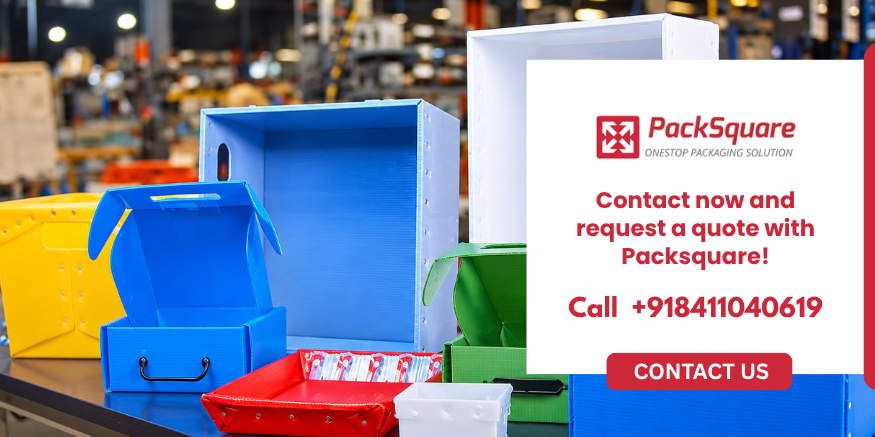
When evaluating a returnable box manufacturer, businesses should consider factors like polypropylene material grade, structural load limits, stacking capabilities, and return logistics requirements.
What Are Returnable Boxes?
Returnable boxes are reusable PP packaging containers built for multi-trip logistics. Instead of being discarded after one delivery, these durable plastic boxes are returned, inspected, cleaned, and reintroduced into circulation. Partnering with a reliable returnable box manufacturer ensures your packaging can withstand demanding industrial supply chains.
Unlike paper-based options, returnable boxes are made from high-density polypropylene sheets or molded plastic. Their construction often includes reinforced edges, secure locking tabs, collapsible walls for easy reverse transport, and integrated handles to improve handling efficiency.
They are commonly used across manufacturing, warehousing, automotive and industrial supply chains, retail distribution, and repeated supplier-to-customer deliveries. For example, an automotive component supplier may use the same set of boxes to deliver parts to a manufacturer every week, with the empty boxes returning for the next shipment.
But how do you know if returnable packaging is suitable for your business? Consider how frequently you ship products, whether containers can be returned efficiently, how much handling they undergo, and whether their durability justifies the initial investment.
What to Look for Before Choosing a Returnable Box Manufacturer
Choosing a returnable box differs from buying standard packaging, like a 3-ply corrugated box for a single shipment. Because the same box may be handled, transported, stacked and stored many times, businesses should look beyond the initial price and consider how well the packaging will perform throughout its expected service life.
Material and Construction Quality
Start by understanding what the box is made from and how it is constructed. The material should suit the product’s weight, dimensions and handling conditions. Ask about board or plastic specifications, structural reinforcement, and the type of loads the box is designed to carry. A box for lightweight retail products may have very different requirements than one for heavy industrial components.
Custom Sizes and Designs
Standard sizes may not always provide the right fit. Ask whether the manufacturer can produce boxes according to your product dimensions and handling requirements. Depending on the application, useful features may include partitions, lids, handles, reinforced corners, and stacking capabilities. A suitable design can also help minimise unnecessary movement inside the box during transportation.
Durability and Expected Usage
Since returnable packaging is intended for repeated use, durability should be one of the main considerations. Ask how the boxes are designed to withstand repeated loading, unloading, stacking, and transportation. It is also useful to understand the expected number of reuse cycles and which conditions could affect the box’s lifespan.
Production Capacity and Consistency
If your business requires hundreds or thousands of boxes, production capacity becomes important. The manufacturer should be able to supply the required quantities while maintaining consistent dimensions, construction and quality across batches. This is particularly important when boxes need to fit standard storage systems, racks, or automated handling equipment.
Application-Specific Recommendations
A manufacturer should ideally understand what you are transporting, how it moves through the supply chain, where it is stored, and how it is handled before recommending a box. Sharing details about product weight, delivery frequency, stacking conditions, and return logistics can help you identify a more suitable packaging design.
Delivery and Support
Finally, consider practical factors such as lead times, minimum order quantities, customisation options, and replacement requirements. If the boxes are part of an ongoing supply-chain system, responsive support can also matter when additional quantities or replacement units are required.
How Do Returnable Boxes Work?
Returnable boxes operate through a simple reuse cycle rather than a one-way packaging process. The exact process can vary between businesses, but the typical cycle looks like this:
Product packed → Delivered → Box emptied → Box returned → Inspected/cleaned → Reused
For example, a manufacturer may pack components into returnable boxes and send them to a customer. After the customer unloads the components, the empty boxes are collected and transported back to the supplier. Before being used again, the boxes can be checked for damage, cleaned if necessary, and returned to circulation.
Where Returnable Boxes Fit Into the Supply Chain
Returnable packaging can be incorporated at several points in a business’s supply chain, including:
Supplier-to-manufacturer movement: Components or raw materials can be transported in reusable boxes between regular supply partners.
Internal warehouse movement: Move products between storage areas, production floors and distribution facilities without repeatedly purchasing new packaging.
Recurring customer deliveries: Businesses that make regular deliveries to the same customers can set up a system to collect empty boxes after each delivery.
Reverse logistics: Empty boxes can be collected, consolidated, and transported back to the supplier or distribution point, ready for the next cycle.
This system works best when product flow is predictable and there’s a practical way to return empty packaging.
Key Benefits of Returnable Boxes
Returnable boxes can offer practical advantages for businesses that regularly move products through the same supply-chain routes. Their value comes mainly from being designed for repeated use rather than a single delivery.
Reusable for Multiple Delivery Cycles
With proper handling and maintenance, the same box can be used for several transportation cycles. This makes returnable packaging particularly suitable for businesses that frequently ship products between suppliers, warehouses, production facilities and recurring customers.
Greater Durability for Repeated Handling
Returnable boxes are generally designed to withstand repeated loading, unloading, stacking, and transportation. Their construction can be selected according to the weight and handling requirements of the products being transported, helping them remain suitable for continued use.
Potential Long-Term Cost Savings
Returnable packaging may involve a higher initial investment than conventional single-use packaging. However, using the same boxes across multiple delivery cycles can reduce overall packaging costs over time. The potential savings depend on factors such as return rates, box lifespan, transportation costs, storage, cleaning and maintenance requirements.
Supports More Consistent Packaging Operations
Using standardised box sizes and designs can make routine packaging processes easier to manage. Consistent dimensions can improve stacking, warehouse storage, transportation and handling, especially when businesses move similar products regularly.
How to Choose Between Returnable PP Boxes and Corrugated Packaging
Neither packaging type is universally better. Returnable PP boxes and paper corrugated containers serve different logistical needs depending on trip frequency, destination control, and handling environment. Whether you need a specialized returnable box manufacturer or corrugated box manufacturers near me, these factors will guide your choice.
How often you ship the same product along the same route is the strongest indicator of which option makes sense.
Frequent closed-loop routes favour returnable PP boxes. If you move products regularly between fixed facilities, warehouses, or dedicated suppliers, working with a returnable box manufacturer to deploy PP containers delivers significant long-term value across dozens of trip cycles.
One-way or varied destinations favour corrugated. If shipments go to dispersed customers where recovering empty containers is impractical, standard options like a 3-ply corrugated box sourced from local corrugated box manufacturers near me provide a cost-effective solution.
Seasonal volume spikes. Many operations rely on PP returnable boxes for baseline daily inventory and supplement with a temporary 3-ply corrugated box supply during peak surges.
Choosing the Right Packaging for Your Supply Chain
The choice between returnable PP packaging and traditional paper packaging depends on your distribution model. Reusable PP boxes excel in predictable, closed-loop operations, while a standard 3-ply corrugated box works well for one-way dispatches.
An experienced returnable box manufacturer like Packsquare can assess your logistics loop and design custom containers. Meanwhile, businesses needing traditional paper packaging can connect with trusted corrugated box manufacturers near me for multi-layer or 3-ply corrugated box orders.
If you want to upgrade your packaging system, consult an expert returnable box manufacturer or contact corrugated box manufacturers near me to request a quote tailored to your supply chain requirements.