
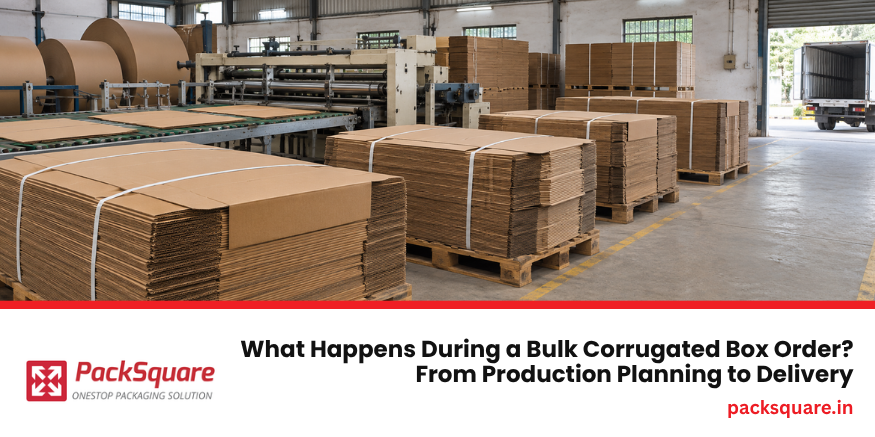
Businesses often place bulk orders for corrugated boxes to meet regular packaging, storage, and shipping requirements. However, arranging a large order involves more than deciding how many boxes are needed. Product dimensions, board specifications, order quantities, production schedules, and delivery arrangements must all be coordinated to keep the process organised. Working with a reliable packaging box supplier can help businesses communicate their requirements and plan each stage more effectively.
Proper preparation also helps reduce the risk of delays, incorrect specifications, and interruptions to packaging supplies. In this article, we explore what businesses can expect after placing a bulk corrugated box order, from the initial planning and production stages to quality checks and final delivery. PackSquare offers corrugated packaging solutions to support businesses with their packaging requirements.
What Should Businesses Decide Before Ordering Bulk Boxes from a Corrugated Box Maker?
Before placing a bulk order, businesses should review their packaging requirements to ensure the boxes suit their products and shipping needs. Consider the following factors:
Product Type: Identify the products that need packaging, including their shape, size, weight, and fragility.
Box Dimensions and Protection: Determine the required length, width, and height, along with the level of protection needed during storage and transportation.
Corrugated Board Selection: Choose suitable board specifications, such as 3-ply or 5-ply, depending on product weight, handling conditions, and transport requirements.
Printing and Customisation: Consider whether the boxes need branding, product labels, handling instructions, or specific design features.
Order Quantity: Estimate the number of boxes required based on production volumes, current inventory, and dispatch schedules.
Specification Details: Accurate measurements and requirements help a corrugated carton box manufacturer prepare a suitable quotation and plan production more effectively.
Production Planning and Scheduling for Bulk Orders
An experienced corrugated box maker coordinates these activities to manage large orders efficiently.
Once an order is confirmed, production planning begins to organise work according to required quantities, box specifications and expected delivery dates. The supplier checks available production capacity and arranges the materials needed for the order. If the order includes different box sizes, designs, or board specifications, each requirement is scheduled appropriately to keep production organised.
The planned schedule must also account for existing orders, machinery availability and the time required for each production stage. Lead times should be considered when confirming delivery expectations, particularly when businesses have fixed dispatch schedules or changing packaging demands. Clear planning also helps the supplier communicate realistic timelines and identify potential scheduling issues before they affect the order.
Material Procurement and Inventory Coordination
A reliable packaging box supplier effectively coordinates material procurement with inventory levels and order quantities to minimize the risk of shortages. Proper inventory planning is essential to maintain organized production and ensure more predictable order timelines.
Before production commences, the supplier arranges the necessary materials, such as corrugated board, paper liners, and other components required for the confirmed order. These materials must align with the approved board specifications, which include the chosen ply and strength requirements. Additionally, these materials should be available in line with the production schedule to avoid unnecessary delays.
This coordination becomes especially crucial when a bulk order includes multiple box sizes, designs or board specifications, as each may require different materials.
How Can Businesses Ensure Consistent Quality Across Large Orders?
A corrugated carton box manufacturer should maintain clear quality checks and coordinate production standards to help ensure that the delivered boxes match the agreed specifications. Once production begins, the supplier needs to monitor each stage to ensure the finished boxes meet the approved requirements. Quality checks may include:
Checking Box Dimensions: Verify that the length, width, and height match the approved measurements. Consistent dimensions help ensure that products fit properly and that boxes can be stacked and stored as planned.
Inspecting Board Construction: Check whether the corrugated board matches the agreed specifications, including the selected ply and material quality. This helps confirm that the boxes are suitable for their intended products and handling requirements.
Reviewing Printing and Finishing: Examine printed text, logos, colours, and labels for errors. Cutting, folding, and finishing should also be checked to identify uneven edges, incorrect folds, or poorly formed boxes.
Conducting Sample Inspections: Depending on the order and production requirements, sample boxes may be inspected at different stages to identify inconsistencies before the full batch is completed.
Identifying Defects Before Dispatch: Look for damaged materials, incorrect measurements, printing errors, or construction issues so that unsuitable boxes can be separated before delivery.
Preparing Bulk Orders for Packing and Dispatch
After production and quality checks are complete, finished boxes are organised for packing and dispatch. This stage involves several important activities:
Counting and Sorting: Boxes are counted according to the confirmed order quantity and grouped by size, design, or specifications.
Bundling and Stacking: Finished boxes are bundled, stacked, or packed according to their construction and transportation requirements to support safe handling.
Labelling and Identification: Different box types or batches may be labelled to make identification easier during loading, delivery, and receiving.
Preparing Dispatch Documents: Order details, quantities, delivery information, and relevant dispatch documents are organised before shipment.
Planning for Receiving: Proper organisation helps businesses check delivered quantities, arrange storage space, and update inventory records more easily.
A reliable packaging box supplier ensures that bulk orders are organised before dispatch, helping simplify the receiving process at the buyer’s facility.
What Should Businesses Expect When Their Bulk Box Order Is Delivered?
Once the boxes are ready for dispatch, transportation needs to be coordinated based on order volume and delivery location. The supplier should plan suitable loading and handling arrangements to help prevent damage during transit. Clear communication about dispatch dates and expected delivery schedules also allows businesses to prepare their receiving facilities.
Before delivery, buyers should ensure adequate storage space and unloading arrangements are in place. Once the shipment arrives, they should:
Verify the Quantity: Compare the delivered number of boxes with the confirmed order.
Inspect the Packaging: Check for visible damage, moisture, or handling issues.
Review Specifications: Confirm that the delivered box sizes, designs, and printing match the approved requirements.
Report Discrepancies: Contact the supplier promptly if quantities are missing or specifications don’t match the order, and provide relevant details and photographs where useful.
Working with a dependable packaging box supplier helps businesses coordinate delivery expectations and address order-related concerns.
Plan Repeat Orders and Future Packaging Requirements
Businesses can use previous purchase records to plan future bulk packaging orders more effectively. Keeping a record of order quantities, box dimensions, board specifications, and approved artwork makes repeat purchases easier to coordinate.
Review Packaging Consumption: Monitor how quickly boxes are used and check current inventory levels to identify when replenishment may be needed.
Estimate Future Demand: Consider production volumes, seasonal changes, upcoming projects, and business growth when calculating future requirements.
Retain Approved Specifications: Keep confirmed designs and measurements available to reduce repeated discussions when placing similar orders.
Maintain Supplier Communication: Regular discussions with a corrugated box maker can help businesses communicate changing requirements, plan replenishment orders, and discuss suitable production and delivery timelines.
Planning Every Stage of a Successful Bulk Box Order
A successful bulk packaging order involves more than manufacturing. Accurate specifications, organised production planning, consistent quality checks, and timely delivery all contribute to a smooth process. Clear communication between businesses and suppliers also helps manage expectations and avoid unnecessary delays.
Choosing a reliable packaging box supplier is an important part of this process. Contact PackSquare to discuss your bulk corrugated box requirements and explore packaging solutions that suit your business.