
A reliable packaging box supplier understands the importance of maintaining production standards while accommodating different business requirements. From standard cartons to customised designs, careful manufacturing helps ensure that each order meets its agreed specifications. Corrugated boxes play an important role in packaging products across industries, from retail and e-commerce to manufacturing and distribution.
However, producing a reliable box involves more than simply cutting and folding cardboard sheets. The process includes preparing corrugated board, shaping it into specific designs, adding printing, and checking the finished packaging for consistency. Each stage shapes the final box’s dimensions, construction and suitability for its intended purpose. PackSquare offers corrugated packaging solutions for businesses looking to meet their packaging requirements through suitable box designs and manufacturing options.
Understanding the Materials Used in Corrugated Box Manufacturing
Corrugated boxes are made using layers of paper that work together to create a structured packaging material. The main components are linerboards and fluted paper. Linerboards form the flat outer surfaces, while the fluted layer sits between them, creating a series of arches that provide structure. The quality and arrangement of these materials influence how the finished box is constructed.
Role of Linerboards and Fluted Paper
Linerboards provide the outer surfaces of corrugated board, while the fluted paper layer adds structure between them. Together, these layers form the basic construction used to manufacture different types of corrugated packaging.
How Paper Selection Influences the Finished Board
The type and quality of paper used during production can affect the board’s thickness, strength , weight, and overall performance. Manufacturers select materials according to the required box specifications and intended application.
Material Consistency Matters During Production
Using consistent paper materials helps maintain uniformity across production batches. It also supports more predictable results in board construction, box dimensions and finished packaging quality.
How Corrugated Board Is Manufactured
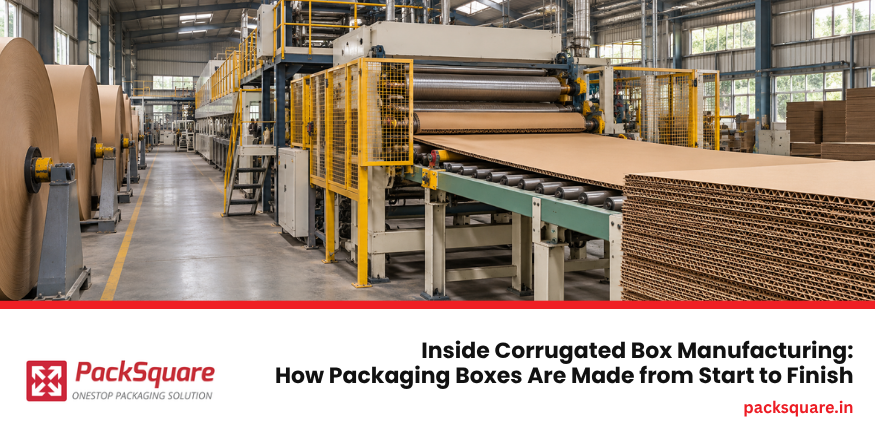
The manufacturing of corrugated boards begins with preparing large paper reels, which are loaded into specialised machinery for processing. The paper passes through heated rollers that help shape one layer into a wavy pattern known as fluting. This layer is important because it creates the structure between the flat sheets of paper.
A corrugated box maker uses this process to produce boards with the required construction and specifications for different packaging needs.
1. Bonding the Linerboards to the Fluting
Once the fluted layer is formed, adhesive is applied to its surface before it is joined with the linerboards. These flat paper layers are attached to the fluting to create a structured corrugated board. Heat and pressure help secure the layers together.
2. Producing and Checking Corrugated Sheets
The bonded board is cut into sheets of the required dimensions and allowed to stabilise before further processing. A corrugated carton box manufacturer also checks the sheets for visible defects, bonding consistency, and dimensional accuracy. These checks help identify production issues before the sheets move to the next stage, where they are converted into finished packaging boxes.
Converting Corrugated Sheets into Finished Packaging Boxes
Once the corrugated board is ready, it moves to the conversion stage, where flat sheets are transformed into packaging boxes. This involves several steps to achieve the required shape, dimensions and structure.
Step 1: Cutting Sheets to the Required Size
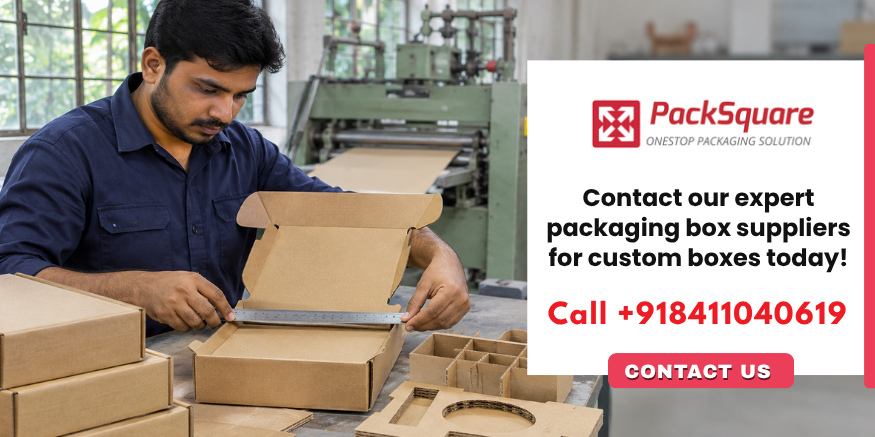
The corrugated sheets are cut according to the measurements specified in the packaging design. Accurate cutting helps ensure that the finished boxes have the correct dimensions.
Step 2: Creating Creases and Folds
Creasing lines are added to the sheets to make folding easier and more precise. These lines guide the folding process and help form the basic shape of the box.
Step 3: Applying Slotting and Die-Cutting
Slots may be created to form flaps and folding sections. For customised designs, die-cutting is used to produce specific shapes, openings or inserts.
Step 4: Forming Different Box Styles
The processed sheets are folded and joined to create different box styles and structures according to the design requirements.
Step 5: Customising Boxes for Each Order
Finally, dimensions and design details are adjusted according to the customer’s specifications. This allows manufacturers to produce packaging that matches different product sizes and business requirements.
Adding Printing and Finishing Details to Corrugated Boxes
Printing and finishing enhance the professional appearance of corrugated boxes and allow businesses to include essential product information. Depending on Packaging requirements, manufacturers can print company logos, brand names, handling instructions, product details, and other relevant information on the box. These details help identify the contents and maintain consistent branding across packaging orders.
Before printing begins, it is necessary to confirm the design, artwork, colors, and placement of information. The printing method should also suit the box material and intended finish. Maintaining color and design consistency is particularly important when producing large quantities, as businesses expect uniformity in the appearance of boxes within an order.
After printing, the boxes may go through additional finishing processes, such as folding, joining and inspecting the printed surfaces. These steps prepare the boxes for their intended use. Careful attention to printing and finishing ensures that the final packaging follows the approved design and order specifications.
Maintaining Quality Standards in Corrugated Box Manufacturing
A corrugated carton box manufacturer should inspect materials and finished boxes at different stages of production. Quality checks are an important part of corrugated box production because they help ensure that finished packaging meets the required specifications.
Important quality checks include:
Board thickness and construction: Checking whether the corrugated layers are properly formed and bonded.
Box dimensions: Verifying that the finished packaging matches the approved measurements and specifications.
Printing and finishing: Inspecting printed designs for clarity, consistent colours, and visible defects.
Bonding and joints: Checking whether the different sections of each box are properly joined. Poor bonding can affect the box’s construction and handling.
Folding accuracy: Ensuring that creases and folds are correctly positioned so the boxes can be assembled properly.
Strength and performance testing: Depending on the box specifications, tests may be conducted to assess stacking strength and resistance to compression.
For a corrugated box maker, these checks help identify production issues, maintain consistency across batches, and ensure that finished boxes meet the agreed order requirements.
What businesses should know about custom corrugated box production?
Custom corrugated box production lets businesses create packaging that matches their product dimensions, design preferences and order requirements. The process usually involves close coordination between the business and its packaging box supplier.
Before production begins, businesses should consider the following:
Understanding order requirements: A packaging box supplier works with businesses to understand the product type, required box dimensions, quantity, and intended application.
Custom box design: A corrugated box maker uses the approved design to produce boxes with the right shapes, folds, flaps and inserts.
Managing production requirements: A corrugated carton box manufacturer plans the production process to maintain consistency across individual boxes and bulk orders.
Confirming specifications: Review and approve artwork, dimensions, quantities, printing details and material requirements before manufacturing begins.
Checking samples: Reviewing a sample can help businesses confirm the design and dimensions before proceeding with a larger order.
Clear communication and confirmed specifications help reduce errors and ensure that the finished packaging matches the business’s requirements.
How PackSquare Approaches Corrugated Box Manufacturing
From selecting paper materials and preparing corrugated boards to cutting, folding, printing, and final inspection, careful attention is needed throughout the process. Producing corrugated packaging involves several connected stages, and each one contributes to the quality and suitability of the finished box.
PackSquare offers corrugated packaging solutions for businesses with different product and packaging requirements. Whether you need standard cartons or customised box designs, its team can help you explore suitable options based on your specifications. Contact PackSquare to discuss your corrugated packaging requirements and find a solution that fits your business.