
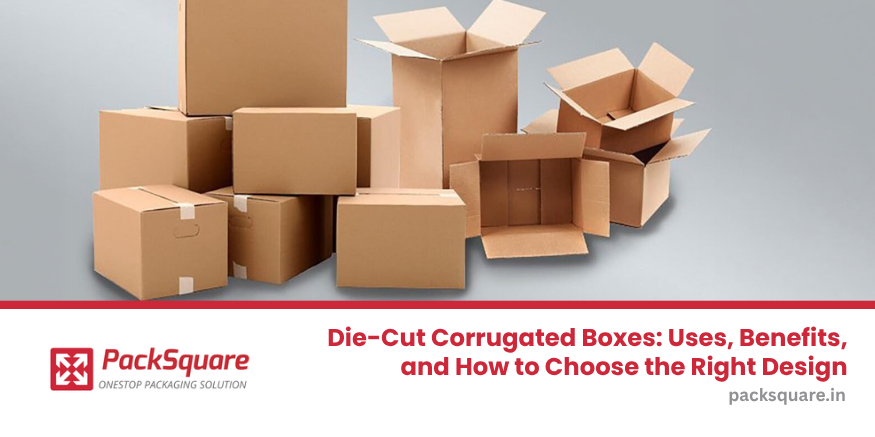
Die-cut corrugated boxes offer businesses a flexible option for creating packaging that fits specific product dimensions and practical handling requirements. With a shaped cutting pattern, these boxes can include customised folds, slots, flaps and inserts to fit products more precisely than some standard box designs.
They can be useful for retail goods, e-commerce orders, industrial components, and other items that need suitable packaging for storage or transportation. Different products require different packaging shapes, sizes, and levels of protection. However, choosing the right design involves more than appearance.
Before placing an order, businesses should consider board strength, product weight, protection requirements and ease of assembly. Working with a knowledgeable packaging box supplier can help businesses check these factors and identify suitable options. PackSquare offers corrugated packaging solutions, including die-punched boxes, to help businesses explore designs aligned with their packaging requirements.
What Are Die-Cut Corrugated Boxes and How Are They Made?
Die-cut corrugated boxes are packaging structures shaped using a specialised cutting die that follows a planned design. Unlike standard corrugated boxes made from common box patterns, they can include customised slots, folds, tabs, flaps and cut-outs to suit specific products and packing requirements. These features help create a defined structure that accommodates the product’s dimensions and intended use.
The design process considers the item’s size, shape, weight, and handling needs. Corrugated board construction also matters because its layers and grade influence the box’s suitability for storage, stacking and transportation. Depending on the design, die-cut boxes can be supplied flat and folded into shape during packing, helping simplify storage before use.
Businesses working with a corrugated box maker should remember that a customised shape does not automatically make packaging stronger. Performance depends on the board grade, structural design, dimensions, and conditions in which the box will be used.
Common Types of Die-Cut Corrugated Box Maker
Die-cut corrugated boxes come in several designs, each suited to different products, packing processes, and handling requirements. Understanding these options helps businesses choose a packaging box supplier that balances functionality, protection, and presentation.
Die-Cut Folding Boxes
Die-cut folding boxes feature scored panels, precisely positioned folds, tabs and flaps that allow corrugated boards to form a specific shape. The packaging box supplier provides flat and assembled boxes when required, helping businesses save storage space before packing. These boxes can suit retail products, accessories, promotional items and smaller packaged goods that require organised presentation and practical handling.
Their dimensions can be customised to fit the product while leaving enough room for protective materials where needed. Depending on the design, the panels may fold into a secure structure with designated closing points, reducing the need for complicated assembly steps.
Self-Locking Die-Cut Boxes
Self-locking die-cut boxes feature specially designed tabs, slots, and folding panels that fit together to hold the packaging in place. Depending on the box design and intended use, this closure style can reduce reliance on separate tape or other fastening materials. The integrated locking mechanism can also make assembly straightforward, which is useful for businesses packing multiple orders or preparing products for retail display.
These boxes may suit accessories, lightweight components, gift items, and other products that need a practical closure and a neat appearance. However, the locking structure must be designed around the product’s dimensions, weight, and handling conditions.
Custom-Fit Product Boxes
Custom-fit die-cut boxes are designed around a product’s specific dimensions, shape, and packaging requirements. Instead of using a standard box size, businesses can customise the length, width, height and internal structure to fit the item more effectively.
When the design matches the contents, it can reduce wasted space and limit product movement during storage and transportation. Custom-fit packaging is useful for products with unusual shapes, specialised components, retail items and accessories that may not sit securely in conventional boxes.
The box should provide enough clearance for easy packing without allowing excessive movement. Board grade and structural design must also suit the product’s weight and expected handling conditions to provide appropriate support throughout distribution.
Die-Cut Boxes with Inserts and Dividers
Die-cut boxes with inserts and dividers keep multiple items organised and help prevent them from shifting against one another during storage and transportation. Inserts create individual spaces for products, while dividers separate components within the same box. Depending on the packaging requirements, these internal features can be customized to accommodate different shapes, sizes, and quantities.
They are useful for packaging product sets, electronic components, accessories, fragile items, and other goods that require structured placement. The effectiveness of this design depends on choosing suitable insert dimensions, board strength, and compartment layouts. The internal structure should hold products securely without making packing unnecessarily difficult or taking up excessive space.
Where Are Die-Cut Corrugated Boxes Used?
Die-cut corrugated boxes suit a range of industries because you can adapt their dimensions, closures and internal structures to different packaging needs.
E-Commerce and Retail
Retailers and online sellers can use these boxes to pack clothing, accessories, small household products, gifts, and other goods. Custom shapes and practical closures support a neat presentation while allowing the box to fit the product appropriately for shipping or storage.
Electronics and Accessories
Electronic accessories, cables, and small components may benefit from boxes with customised compartments or inserts. These features help keep items organised and reduce unnecessary movement during handling.
Industrial Parts and Components
Manufacturers and distributors can use shaped corrugated packaging to accommodate specific component dimensions, separate individual parts and simplify packing for storage or delivery.
Food and Consumer Goods
Die-cut boxes can serve as secondary or outer packaging for packaged food and other consumer goods, provided the design meets relevant handling and product requirements.
A suitable corrugated box manufacturer near me can help check the board grade and structure needed for the intended use. Across these applications, businesses should consider product weight, fragility, transport conditions, and required protection before selecting a design.
Select the Right Die-Cut Box Design
Choosing the right die-cut box design involves balancing product protection, practical handling, and packaging costs. Businesses should check the following factors before finalising a design.
Assess Product Dimensions and Shape
Accurately measure the product’s length, width, and height, including protruding parts and handles that may affect how it fits inside the box. For products with irregular shapes, consider the widest and tallest points to determine suitable internal dimensions.
Allow enough clearance for easy packing and removal, while avoiding excessive space that could let the item move during transportation. If the product requires cushioning, protective wrapping, or inserts, account for the additional space these materials will occupy. Accurate measurements help determine the box’s dimensions and create a design that supports efficient packing and appropriate product protection.
Consider Weight and Fragility
Businesses should also consider how frequently the package will be handled, whether boxes will be stacked, and the conditions they may encounter during delivery. The product’s weight and fragility influence the required strength and structure of the box. Heavier items may need a suitable corrugated board grade and reinforced construction to support the load during storage and transportation.
Delicate products may require cushioning materials, custom inserts, or dividers to limit movement and reduce the risk of impact damage. Matching the design to these requirements helps provide appropriate protection without adding unnecessary packaging material.
Choose Suitable Corrugated Board
Businesses should tell corrugated box manufacturers near me how far products will travel and whether the packaging may face pressure, moisture or repeated handling. Corrugated board construction and grade affect a box’s strength, cushioning, and ability to withstand handling during storage and transportation. The right choice depends on the product’s weight, how boxes will be stacked, and the conditions they may encounter during distribution.
Choosing a board based on these practical requirements helps balance protection, material use, and packaging costs rather than focusing on appearance alone.
Plan Closure and Internal Support
A well-planned design balances secure packaging with convenient assembly and efficient packing. The closure design should keep the box securely assembled while allowing staff to open and close it as required. Tabs, slots, and folding flaps can provide practical closure options, depending on the box structure and how it will be handled.
For products containing multiple components or delicate items, inserts and dividers can create separate compartments and help limit movement inside the package.
Evaluate Storage and Assembly
When contacting a corrugated box manufacturer near me, share product dimensions, photographs or drawings, packing requirements, and expected order quantities. Consider available storage and packing-line requirements before choosing a structure. Flat-packed boxes save storage space, while simple assembly supports efficient packing operations.
These details help the packaging box supplier check suitable designs and recommend a practical solution.
What to Check Before Ordering Custom Die-Cut Packaging?
Before ordering custom die-cut packaging, businesses should confirm the specifications to ensure the final boxes meet their requirements.
- Design specifications: Verify dimensions, cutting patterns, fold lines, and closure styles before approving the design.
- Material suitability: Check that the corrugated board grade and construction suit the product’s weight, protection needs, and intended use.
- Printing requirements: Decide whether the packaging needs branding, product details, or handling instructions, and confirm the artwork before production.
- Sampling and testing: Request a sample or prototype to check product fit, assembly, and practical performance.
- Order quantities and lead times: Confirm minimum quantities, production schedules, delivery dates, and arrangements for repeat orders.
- Cost considerations: Review the full quotation, including design, tooling where applicable, printing, and production costs.
Clear specifications help reduce misunderstandings, minimise avoidable design changes, and make it easier to compare suppliers before placing an order.
Die-Cut Box That Fits Your Needs
The right die-cut corrugated box balances product protection, practical handling, and presentation. Its dimensions, board construction, closure style, and internal supports should reflect the product’s weight, fragility, packing process, and transportation conditions. Before ordering, compare suitable designs, confirm material specifications, and request a sample. Clear communication with your supplier can also help align production requirements, quantities, and delivery schedules.
PackSquare offers corrugated box making, including die-punched boxes, for businesses exploring corrugated box manufacturers near me. Contact PackSquare to discuss your product requirements and identify a suitable die-cut packaging design.